Showing posts with label Painting Mexico. Show all posts

Thursday, September 30, 2021

La Noria de Santo Pantaleón 

Sombrerete, Zacatecas

– A Mining Ghost Town -


“If you were an eagle soaring in the restless mountain winds, you would spy a town below, its ruins clinging to the craggy slopes.  You would see old walls, strange, conical formations-and a tiny, orange chapel.  This is an old, ghostly mining town called La Noria de Santo Pantáleon”. 


Resting in the notch of a low mountain just to the northwest of Sombrerete is the abandoned, mining ghost town (pueblo fantasma) of La Noria de San Pantaleón.  Well, it’s not quite abandoned, as about 20 families, mostly descendants of the original miners, returned to re-occupy some of the long-deserted casas that once comprised the now tiny community. (The town reached a population of 5000 in the early 20th century).  The old 16th century Spanish Colonial gold and silver mining town sets at an altitude of around 8,700 feet (2,684 meters).  The community now consists of scattered casas and tiendas, a church (Templo San Pantaleón) with a convent attached, a tiny chapel, and a few, small civic buildings.  On the nearby mountainside sets the remains of old mining structures, and curious, conical structures long ago deposited by the excavated material from the mines bored into adjacent mountains. (The material was deposited by large containers suspended by cables). The (four) huge conical piles gradually solidified into solid structures that appear like extra-terrestrial creations.  On the top of a nearby ridge is an observation tower built by the local population.  “La Noria”, as it is called, is a curious place with intriguing beauty, and most worthy for exploring, painting, and photographing. 


Sketch map of La Noria´s central garden, watercolor by author. 


During my visit there with the Director of the Tourism Office, I manage to measure and sketch the centrally located plaza edged by a small church and abandoned structures. Next to the church is a small garden (jardín) with a gazebo (kiosco) in its center.  I quickly concluded that this magical pueblo fantasma deserved a place in this book.  I highly recommend spending time here.  The community is small and very safe. 


Vista (watercolor) of La Noria.

Be sure to bring a picnic lunch and plenty of water.  La Noria is about a 20-minute taxi ride from Sombrerete´s historic center.  Because of its high altitude, dress accordingly. 


A Casa in La Noria, oil painting by the author. 


La Noria de Santo Pantaleón will be include in my upcoming book, Painting Mexico: Sombrerete. 

Saturday, June 1, 2019

Nochistlán, ZAC, a Pueblo Mágico

Nochistlán de Mejía, A Pueblo Mágico

The road to Nochistlan, a narrow, rolling ribbon of asphalt, follows a broad valley with undulating mountain ridges appearing on both sides.  Villas, haciendas and roadside stands dot the roadside, often appearing at unexpected intersections as the swaying bus rounds a bend in the road.  The bus stops often, seeming to trade one passenger for another.  A woman climbs aboard and sits up front on an inverted bucket and chats animatedly to the driver.  They are surely old friends….

Nochistlán's Historic Center. 


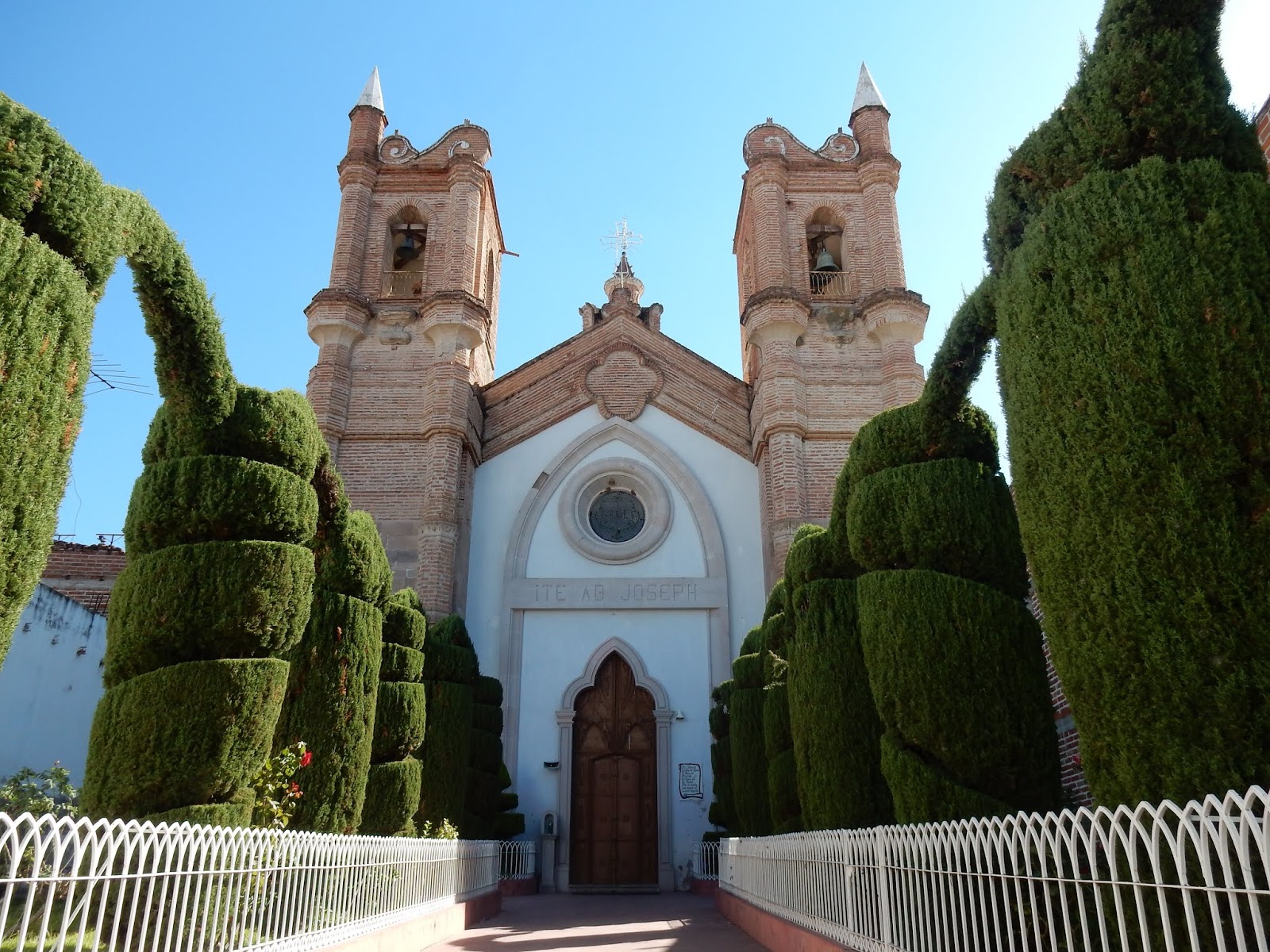
One of several lovely churches...

Nochistlan de Mejía, a remote pueblo built to sustain the nearby area of farms and ranches, occupies a broad ridge that slopes into a surrounding valley.  Hazy, grey-green mountains frame the town.  Nochistlán, laid out with narrow, gridded streets that are lined with low building built from the stone of local quarries, the earthy colors and painted stucco providing harmony and charm to visitors and locals, alike.  Nochistlán is located in semi-arid mountainous southern Zacatecas. 

j.k. Hannula: Illustrative Plan of the Historic Center, graphite & watercolor on Arches Paper,  22 x 30" , 2018 c.

Nochistlan offers us the opportunity to paint:

* townscapes
* park and garden scenes
* farms, animals and farmland
* mountain-valley landscapes
* themes & studies

A Portale (covered walkway)..

This alluring pueblo is a 3-hour bus ride south of the capital city of Aguascaliente; Nochistlán’s bus station (central de autobuses) is on the edge of town, a 5-minute taxi ride to the historic center, where you’ll find hotels and a vibrant town life.

The Captivating Indigenous Village of Toyahua

Nochistlan has three main areas of interest for artists: the historic center (centro historico), an art walk (Ruta de Vistas), and an indigenous village, Toyahua de Abajo, located about 15-kilometers from town.  

A Lane in Toyahua

Waterfall near Toyahua

An Acquaduct 

The Central Garden (Jardín Principal) 

The Author ( R) with a local restaurant owner
I plan to include Nochistlán in a future book on Painting Mexico.  To see additional photographs of Nochistlán, see an album on my Facebook Page.

Thursday, April 25, 2019

The Camino Real (The "Silver Route")

Mexico’s Camino Real, the “Silver Route” 

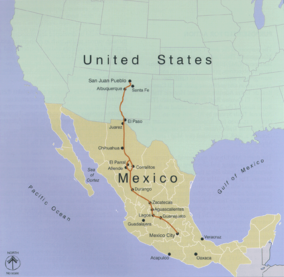
Mexico’s has an historic route called the Camino Real or, more formally, the  “Camino Real de Tierra Adrentro” (“Royal Road of Interior Land”), a commercial route that extended from the Valley of Mexico to Sante Fe, New Mexico (16th – 19thcenturies).  The route, then a trail traveled by foot, horses and wagons, included many outposts –forts, haciendas and chapels- to protect the Spanish travelers from attacks by indigenous peoples, especially the Chichimecas.  The route was also called La Ruta de la Plata (“The Silver Route”), because it followed a chain of volcanically formed mountains where minerals such as silver, gold, copper, turquoise and salt were mined.  The 2,560-kilometer (1600-mile) route, now an UNESCO World Heritage Site (Patrimonial Mundial), has 59 historic points along the way.  

CaminoRealAdentro.png

This route was well established by indigenous kingdom and tribes long before the Spanish arrived in the 16thcentury.  Elcamino, used for hunting and trade, connected important locations in Meso-America and the Rocky Mountains by the year 1000. The route follows the long, rugged Sierra Padre Mountain chain, emblematic of the breathtaking “Western” landscape.  

El Centro Historico, San Miguel de Allende
Many of the pueblos in this blog or in my book projects are either directly on el Camino  (Guanajuato City, San Miguel de Allende, Sombrerete) - or were functioning offshoots, such as Dolores Hidalgo, Mineral de Pozos, Calvillo, Real de Asientos, Pinos and Nochistlán.  The adjacent off-shoot towns provided essential services for mining and traveling on the Camino Real, such as security out-posts, banking, supplies and food sources like ranching and farming (San Miguel de Allende, Dolores Hidalgo).

Sombrerete, a Pueblo Mágico on El Camino Real
 
Many of these pueblos have historic Camino Real sites and structures such as churches, bridges, cemeteries, mines, aqueducts, etc.. El Camino now consists mostly of highways and roads that connect or link the recognized sites and structures.  Many of these sites are fascinating and scenic subject matter for painting or photography.  I urge you to visit them. 

The Historic Church/Convento, Atotonilco (San Miguel de Allende)

 My current residence in San Miguel de Allende is on the official route; and several painting locations in my book are Patrimonial Mundial sites. I intend to emphasize, whenever feasible, these captivating sites in future writings. 

Pinos, Pueblo Mágico-an Old God & Silver
Town. 
The follow link summarizes the Camino Real clearly and succinctly: 
https://en.wikipedia.org/wiki/Camino_Real_de_Tierra_Adentro

Saturday, March 30, 2019

Mineral de Pozos, Pueblo Mágico

Mineral de Pozos
(San Pedro de los Pozos)****

Detail of my "Route of Vistas"

An hour drive northeast of San Miguel sets a small Colonial mining town known simply as “Pozos”.  Nestled in rugged mountains Pozos –and its once intensively mined area (silver, gold and rare metals)- offers us an exceptional painting opportunity in an authentic, off-the-beaten path setting. Pozos is a sleepy, laid-back place most suitable for undisturbed writing and art in a rural Mexico setting. This is a village of colorful casas; narrow, cobbled lanes and chapel domes punctuating the azure sky.  Mineral de Pozos, an officially designated Pueblo Mágico founded in 1576, is one of my most scenic towns, with hundreds of “postcard” scenes to add to your body of work.

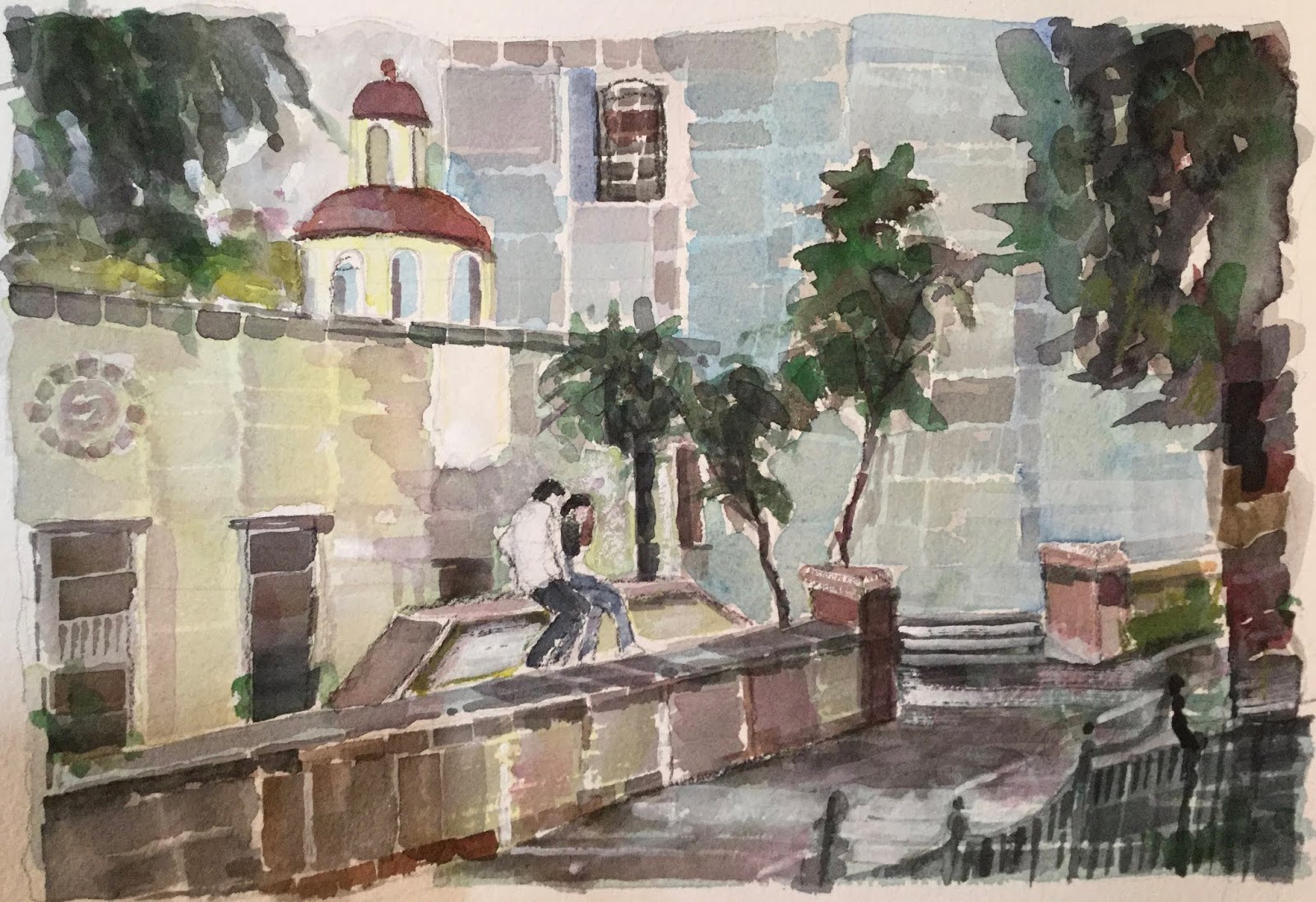
Watercolor; "The Lovers", Plaza Principal

Pozosoffers us a wide variety of painting opportunities that include:

* townscapes & historic architecture (especially mines)
* garden scenes
* vast, breathtaking landscapes
* themes & studies


The heart of Pozos is la Plaza Principal, a classic, formal, garden-like space edged by freshly painted, one-and-two story buildings constructed in a pueblo-early Baroque style. Civic buildings, a hotel, a bed and breakfast, casas and assorted shops occupy the buildings surrounding this captivating plaza. From here, narrow cobbled streets arranged in a grid pattern extend to the nearby foothills. The immediate encompassing area was heavily mined; much of the structural remains of the mines -such as buttressed walls, aqueducts, casas and abandoned chapels are still in place, providing us with a plethora of authentic, historic views. Local entrepreneurs offer tours of the mines. 


Though a simple, quiet and relatively poor village, Pozos has a magical charm, a special quality for artists -and I believe it will prosper because of it special appeal and beauty. Ample lodging and restaurants provide you with a comfortable stay. Pozos is accessible by frequent bus service from Queretaro, Dolores Hidalgo, Guanajuato and San Luis Potosí. A few small hotels, posadas(inns) and a several Beds & Breakfasts provide comfortable lodging.


It was in the 21stcentury when Pozos emerged from its birth -and into a deep slumber- when nearly abandoned (in the 20thcentury) a time when demand for, and deposits of, minerals faded away.  Pozos is a town built around mining, processing of minerals, companies supplying the industry and housing the miners.  As such, Pozos was planned with military-like efficiency, with nearly straight streets (calles) forming a grid pattern that cover a mesa(flat hill) in the middle of a valley.  The mesa’s two major ridges dip into the center providing an ideal location for the town’s center, an area of civic buildings, churches and shops.  The streets are narrow and edged with adobe walls; las callesare paved with cobble stones, an ideal surface for horse and mule-drawn carriages and carts. Though once nearly abandoned, Pozos is arising from its past with a steady restoration of its historic center and nearby mines.  Pozos is a small town with a population of approximately 7,000; it is an extraordinarily enchanting and romantic place but, being small, has limited socializing opportunities (which may not matter if you are with companions). 
    

Many of the original casas are now in ruins, intriguing ghosts of its past -and now a “living outdoor museum” where you’ll encounter flocks of sheep, ducks and vaqueros(cowboys) on horse-back coming down the narrow lanes. Our areas of interest for landscapes are in the historic center, el centro historico, and the roads that lace the nearby mountains, connecting the various mines. Let’s now explore the area, beginning in el centro historical ...


A thorough description of the beauty of Pozos can be found in my book.  

Thursday, March 28, 2019

Ajijic & Lake Chapala

In March of 2018, I spent nearly a week in the lakeside town of Ajijic, State of Jalisco, in west-central Mexico-to see if the area was as scenic as I had heard from many friends.  I was traveling with Rebecca, my companion, who had lived in Ajijic for many years. She was a knowledgable guide, not only of the town and surrounding countryside, but also of the many, vibrant restaurants, bars and art galleries  Staying in a small hotel in the central plaza, I passed the following days exploring the narrow, cobbled lanes, the lakeside and a scenic trail that leads to 10 Stations of the Cross on the fronting hill side.

A beautiful lakeside

Although not an official Pueblo Mágico, Ajijic aspired to be one, but was rejected.  My take is that Ajijic was "already" one; it was more sophisticated and prosperous than many true 'Mágicos'.

Ajijic has plenty of cafes, bars and restaurants 

As you know, I search for towns and places for their scenic beauty and ability to accommodate traveling artists.  Ajijic is such a place, especially with the lakeside elegance of the nearby town of Chapala, a place with a developed lakefront and upscale hotels.  Together, the two towns provide an infinite number of places and spaces from which to paint a wide variety of trophy landscapes.


Time allowing, I would definitely include these two lovely towns and their defining lakeside and backdrop mountains in a future book.  Not only is the scenery enchanting, but the wide variety of eating and drinking establishments will keep you satiated for your entire visit.  For English speakers, the Lake Chapala region has a large population of retirees from North America.


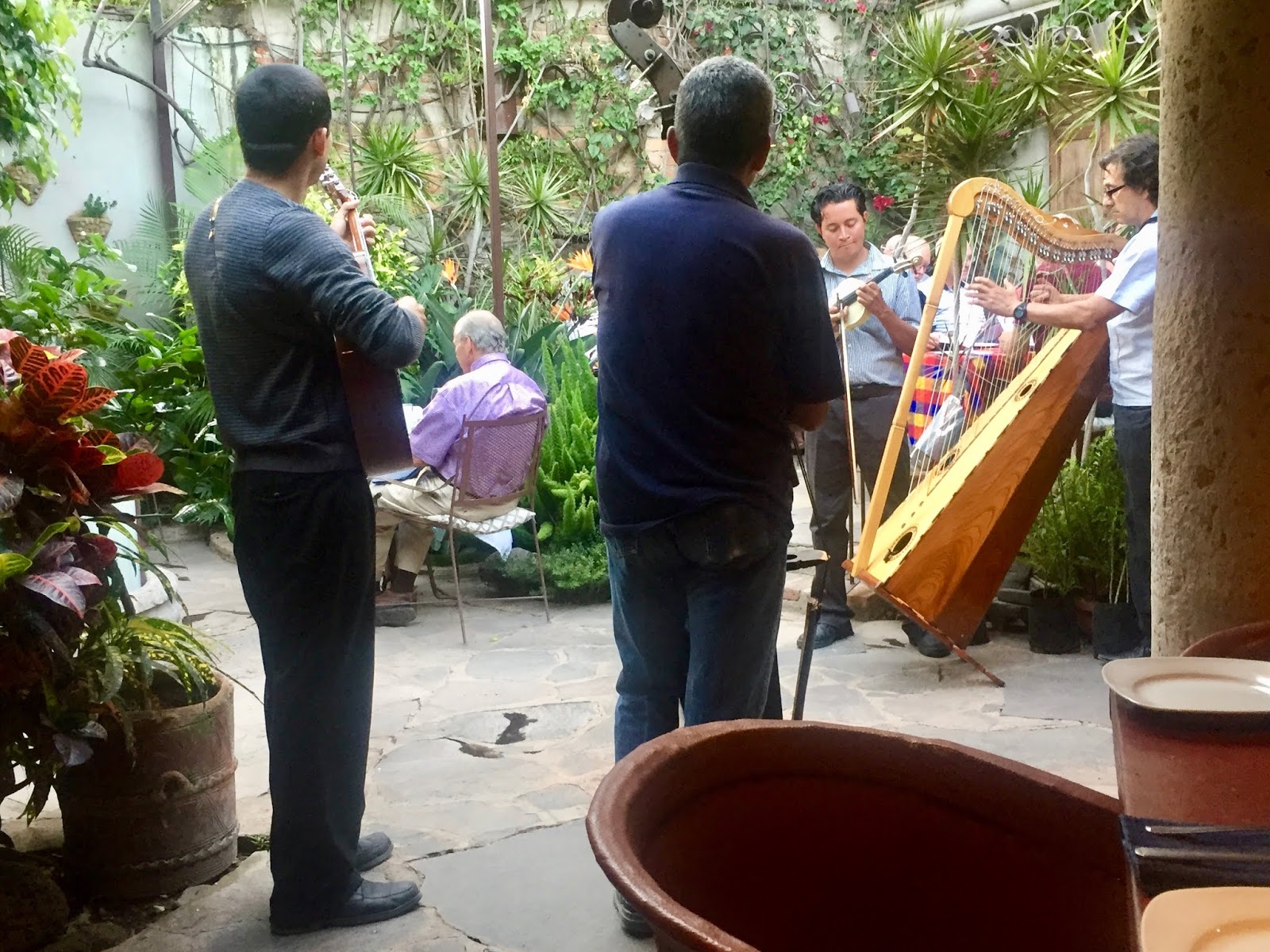
Food & music aplenty

Dozens of trophy landscapes

I also posted a more extensive album of 30 photographs of Ajijic on my Facebook Page: Painting Mexico's Magical Towns. Note that Lake Chapala was selected for water sports for a past Olympic event.

The chapel atop the trail, 10 Stations of the Cross.  This point overlooks the lake.

Sunday, March 10, 2019

The Scenic City of Guanajuato, an UNESCO World Heritage Site

The Scenic City of Guanajuato

“Flight # 327 rose from the runway, a howling bird in a dense Christmas sky.  Wings swept back, tail held high, the sleek silver bird soared into the clouds and headed south by southwest to Dallas/Fort Worth and then Leon/Guanajuato.  There, in the bright mountain sun, creative adventures await … “  
journal entry 12-25-2015


Guanajuato City, the Capitol of Guanajuato State (Estado), is an old Spanish Colonial mining town located about a 5-hour drive to the northwest of Mexico City.  Snuggled in a valley in a mountainous area, Guanajuato rests within a vast region once inhabited by the ancient Aztecs, whose culture and traditions (along with the colonizing Spanish), molded this mysterious and enchanting town noted for its intriguing Colonial history and stately Baroque architecture.  Guanajuato is an official UNESCO site.


 For artists, Guanajuato offers many opportunities to paint in quaint plazas, charming gardens and vibrant city streets that twist and turn, following the contours of the enclosing hills.  The town is a maze of neighborhoods (barrios) and a stunning central, historic district (centro historico). Guanajuato is a town you won’t forget.  The image above is a map I made for one of Guanajuato'' beautiful plazas, Plaza Mexiamora.  


Guanajuato was a Spanish colonial mining town known for it precious metals –gold, silver, copper, quartz, etc. Many mines in the area brought in great wealth to governments, aristocratic families, the Catholic Church and merchants.  With impressive expertise in mining engineering, the town built a subterranean infrastructure of tunnels and passageways, which now serve as roads, parking, sewage routing and associated uses.  Hence, much of the street traffic found in traditional cities of this size is routed underground, allowing for a large part of the central area to be pedestrian dominant.  The surface traffic that does exist is primarily buses, taxis, delivery vehicles and pedestrian drop-offs.  The street life is thus vibrant, active and safe.  Guanajuato’s handling of trafficis a rare and brilliant solution for town planning.   


Guanajuato State is about the size of the US state of Rhode Island in area.  Besides Guanajuato City (Ciudad de Guanajuato) the three other magical towns included in this book in el Estado de Guanajuato are Dolores Hidalgo, San Miguel de Allende and Mineral de Pozos.  Dolores Hidalgo is where the Insurrection began which led to the revolution and the birth of the Mexico Nation.  As such, Guanajuato is often referred to as the “heart of Mexico”.


Getting there   You’ll likely get there by flying to the Léon Guanajuato Aeropuerto(BJX) and then take a van (camoneta) or taxi for a 20-minute ride into town, some of the drive within the town through a maze of tunnels.  Alternatively, you may fly to Mexico City or Queretaro and take a bus to Guanajuato. There you’ll find ample lodging, from luxury hotels to B & B’s or hostels.  

Guanajuato is a compact, pedestrian town where having an auto is unnecessary. Ever-present taxis and a regular bus service provide all the transportation you’ll likely need.  The town is well organized for exploring, with abundant street signs, historic place markers and plentiful map signs, so all of the recommended painting locations are easy to find.

A university town (University of Guanajuato), Guanajuato has a vibrant, youthful academic culture that supports, bookstores, art galleries, museums, bars, cafes, yoghurt shops and the likes. There is much to explore and discover in this delightful and enchanting town.  

Places to Paint.  For artists, our main area of interest is the town’s historic center (centro historico).  Many vibrant areas of narrow streets and open spaces lined with civic buildings, churches, colorful row-houses, shops, restaurants, banks and bars –will surely make your stay inspiring, engaging and artistically productive.  You’ll find pastel colored buildings lining the streets like rows of cupcakes.  The civic architecture, built during the Colonial era in the High Baroque and Spanish Renaissance style, is characterized by stone masonry and stucco that form a riot of geometrical shapes and blocks of color.  The buildings are adorned with balconies edged with wrought iron, potted plants and quaint lamplights.  The maze of zigzagging streets is paved in patterned stone and lined with colorful doorways and wrought iron gates, exposing numerous gardens. For visual artists, Guanajuato offers the following art themes:

A Park (La Presa) at the Edge of Town
* townscapes and architecture
* garden and park scenes
* café art
* panoramic mountain-valley landscapes
* themes and detailed studies

My book explores the town and identifies places to paint or photograph in some of its most scenic and interesting areas.  You’ll find lavish details of a half dozen scenic locations in the section on Guanajuato City. 


To purchase a “Painting Mexico” book from publisher (less expensive): 
http://www.blurb.com/b/8596527-painting-mexico-magical-pueblos-in-guanajuato
(This site is set to allow you to view all the pages in the book)

To purchase “Painting Mexico” book from Amazon: http://a.co/65YVml8   

Please help me fund my art-travel books by purchasing prints on FineArtAmerica.com.  (All expenses for the production and publishing of these books are self-funded by me.  I consider much of my effort to promote scenic tourism to towns in Mexico to be charity).


Plaza San Francisco-1
Plaza San Francisco-2


Finding Hotel Rooms in Mexican Towns

Finding Hotels in Mexican Towns
3-10-2019

Finding hotel rooms in Mexico’s towns, including Pueblos Mágicos, can be easy –or challenging. Basically, finding a hotel room depends on desirability of the town for visiting (demand), whether for tourism, business or other purposes. (Many of the towns that I suggest are stunningly beautiful but are off-the-beaten-path and are recommended for artists and photographers because of their scenic quality, architecture and history). Demand is also influenced by accessibility: whether there is easy highway or road access to the town, which is often the case of rugged, mountainous Mexico. Despite a town’s attractions, you may not be able to find or book a hotel room before visiting.  Let me explain why.

A large percentage of small hotels, many family-owned, cannot be found on the Internet because they do not list themselves.  This is due to the fees charged by booking sites (such as booking.com, hotels.com, or even AirBnB.com).  Booking sites generally charge around 18% for their fees.  

Another reason is that small hotels minimize (or hide) tax exposure by not being electronically “visible” by being on-line, or accepting credit cards. Thus, booking a room is often simply a cash transaction. 

Not being able to find such small hotels is a shame, because many are gorgeous, well-run hotels run mostly by families.  I’ll give you a couple of examples…

San Joaquin, Pueblo Mágico
Last year (2018) I visited a Pueblo Mágico in the Sierra Gorda Mountains in the State of Querétaro called San Joaquin.  While planning my visit I searched for hotels on-line.  I found none in San Joaquin, a town with roughly a population of 15,000.  However, the searched showed hotels in other towns in the mountainous region, the closest on a 2-hour bus ride away.  My reaction was one of disbelief, knowing that San Joaquin was an established Pueblo Mágico.  Nevertheless, I went there anyway, having faith from experience that I would find a room.


Upon arriving in San Joaquin and asking at the tiny bus station in the town’s center, I found a nice, unlisted hotel a 5-minuite walk away. Within a few days of exploring and talking to the Director of Tourism, I found out that there were about a half-dozen hotels in town, many better and less expensive!  When telling the Tourism Director that I almost did not visit because of what appeared to be a lack of lodging, the Director shrugged in defeat, knowing the economics of this small, relatively poor, rural town.  

Dusk in Jala, Nayarit
In a recent visit to the Pueblo Mágico of Jala in the State of Nayarit, I encountered the same situation while traveling with a travel-writer colleague, Barbara Shaw (2barbshaw.blogspot.com).  A search showed no hotels in Jala, only a few in two nearby towns located along a regional highway.  (Jala is a couple of miles from the main highway). Knowing this lodging dilemma, we went there anyway and promptly found a small hostel with four rooms clustered around an internal courtyard.  It was a lovely place that Barb had found by simply asking a woman on the bus.  The next day a Tourism Office Guide told us that there were some other unlisted hotels in town-unlisted for the same reasons of avoiding fees and taxes.  This is economic reality in rural Mexico.  Of course, if you did have the hotel’s telephone number or e-mail address, you could find and reserve a room beforehand. 

A Vender in Jala

This leads me to my recommended use of official “Pueblos Mágicos” for scenic travels: they are required to have a functioning Tourism Office, Oficina Turismo, with someone there, seven days a week. Knowing this, you can go directly to the pueblo’s Oficina Turismofor help in finding lodging. In my many years of traveling, I have never been without a room.    


To purchase a “Painting Mexico” book from the publisher (less expensive): 
http://www.blurb.com/b/8596527-painting-mexico-magical-pueblos-in-guanajuato
(This site is set to allow you to view all the pages in the book)

To purchase “Painting Mexico” book from Amazon: http://a.co/65YVml8   

Please help me fund my art-travel books by purchasing prints on FineArtAmerica.com.  (All expenses for the production and publishing of these books are self-funded by me.  I consider much of my effort to promote scenic tourism to towns in Mexico to be charity).

To purchase prints of some of the paintings, drawings & maps in this book: www.fineartamerica.com“Jack Hannula” 

Monday, February 25, 2019

The Town of Tequila

On a recent trip to Mexico's Pacific coast in mid-February 2019, I visited three towns that were quite interesting and scenic: La Peñita de Jaltemba, Jala and the famous pueblo of Tequila. Of the three, Tequila was the most interesting, so I will begin with this captivating town.  Below is a brief summary with some characteristic photos of this town.


The Pueblo of Tequila as seen from the main highway.
Tequila is both a town (pueblo), and a liquor made from the agave cactus. Which came first, I don’t know. The ‘magical’ pueblo Tequila is located in a semi-arid mountain-surrounded valley to the west of the city of Guadalajara, central Mexico.  The town is designated an official Pueblo Mágico because of its charm and identity as the hub of the tequila industry.  The surrounding region is an UNESCO World Heritage "Cultural Landscape', a landscape noted for vast, polygonal fields of agave cacti that cover the mountainsides and valley slopes like textured carpets "painted" in the plant’s blue-green color.  There are roughly 100 haciendas de tequila(tequila (distilleries) in the town and its encompassing region.  The town’s historic center, centro historico, is noted for its Baroque church, vibrant plazas, and colorful array of tequila and gift shops, bars-and the famous distillery, José Cuervo. Because tequila is consumed globally, this town has international tourism, with English spoken in most restaurants and hotels. A tourist office, Oficina de Turismo, is located on the main plaza. 


For visitors, there are about a dozen hotels located in the town. Many of the hacienda-agave farms also offer lodging. An unusual collection of tour buses, most shaped like tequila bottles and barrels, will spirit you around town or to the haciendas where you can taste or purchase tequila-and tacky memorabilia-or assorted indigenous crafts in wood and ceramic.  
  

This interesting and scenic pueblo deserves to be in one of my future "Painting Mexico" books. To write a book about Tequila, I would need to return to this town for several weeks.  This is my first Book Link:  http://www.blurb.com/b/8596527-painting-mexico-magical-pueblos-in-guanajuato

Arriving by regional bus (Pacifico and Quick bus lines) from the coast (La Peñita), we passed through the towns of Compostela,  Ixtlán del Rio, Magdalena before arriving in Tequila. I traveled with a colleague, Barbara Shaw, a journalist and seasoned travel writer (for another perspective on Tequila, see Barbara's blog: 2barbarashaw.blogspot.com).  Buses to Tequila from Guadalajara depart from the old bus station, El Central Viejo. The bus line is called “Quick”. 

One of José Cuervo's Distillery Rooms
While there, be sure to take a tour of José Cuervo's large distillery.  The tour includes access to their impressive museum.  

I'll conclude this posting with a video of indigenous pole acrobats (voladores) who perform in the main plaza in the afternoons.  


San Miguel´s “Globo” Skyscape J. K. Hannula San Miguel is routinely acclaimed as the world’s most beautiful -or “most livable” town/small...