Mineral de Pozos
(San Pedro de los Pozos)****
 |
| Detail of my "Route of Vistas" |
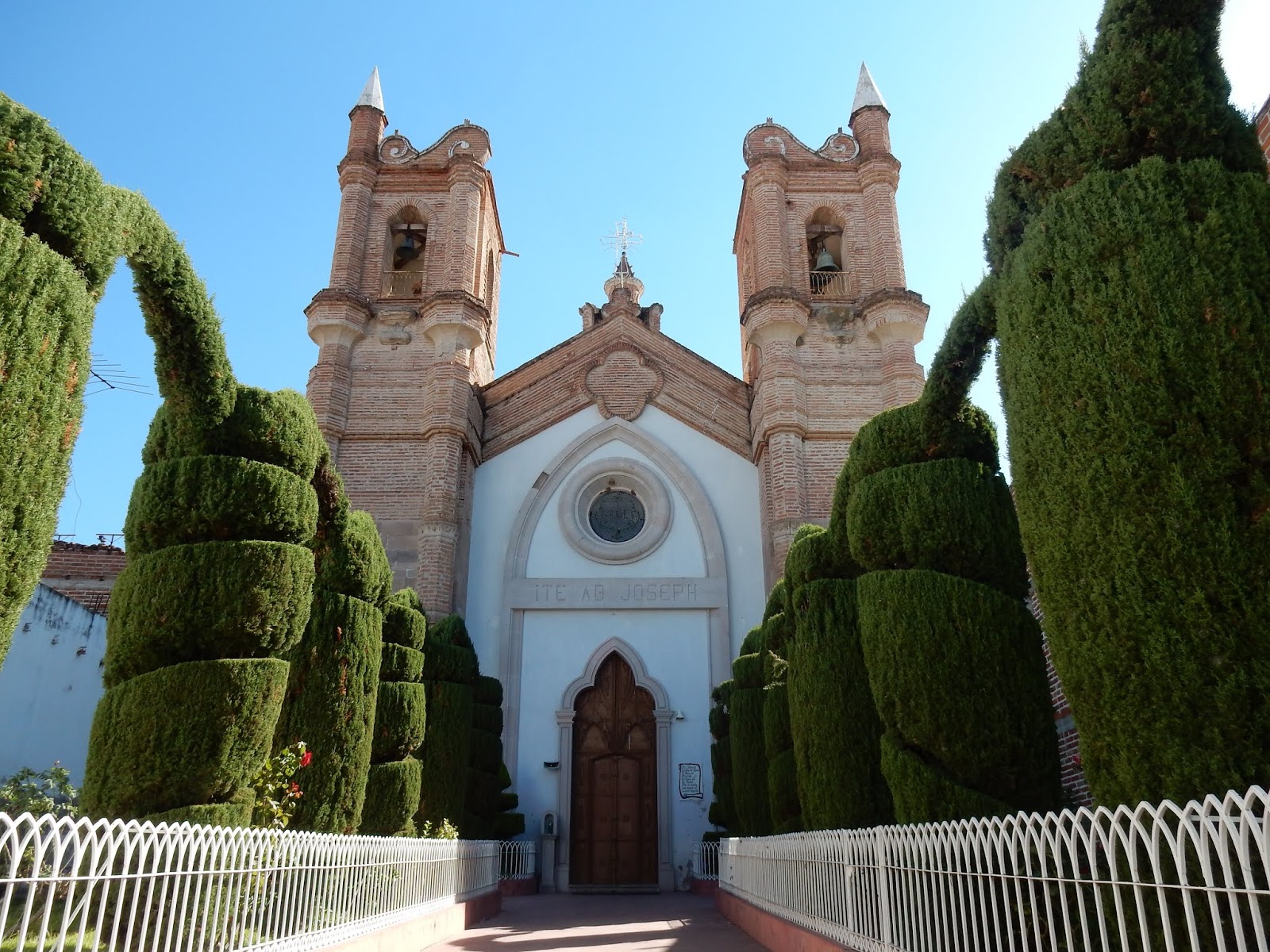
An hour drive northeast of San Miguel sets a small Colonial mining town known simply as “Pozos”. Nestled in rugged mountains Pozos –and its once intensively mined area (silver, gold and rare metals)- offers us an exceptional painting opportunity in an authentic, off-the-beaten path setting. Pozos is a sleepy, laid-back place most suitable for undisturbed writing and art in a rural Mexico setting. This is a village of colorful casas; narrow, cobbled lanes and chapel domes punctuating the azure sky. Mineral de Pozos, an officially designated Pueblo Mágico founded in 1576, is one of my most scenic towns, with hundreds of “postcard” scenes to add to your body of work.
 |
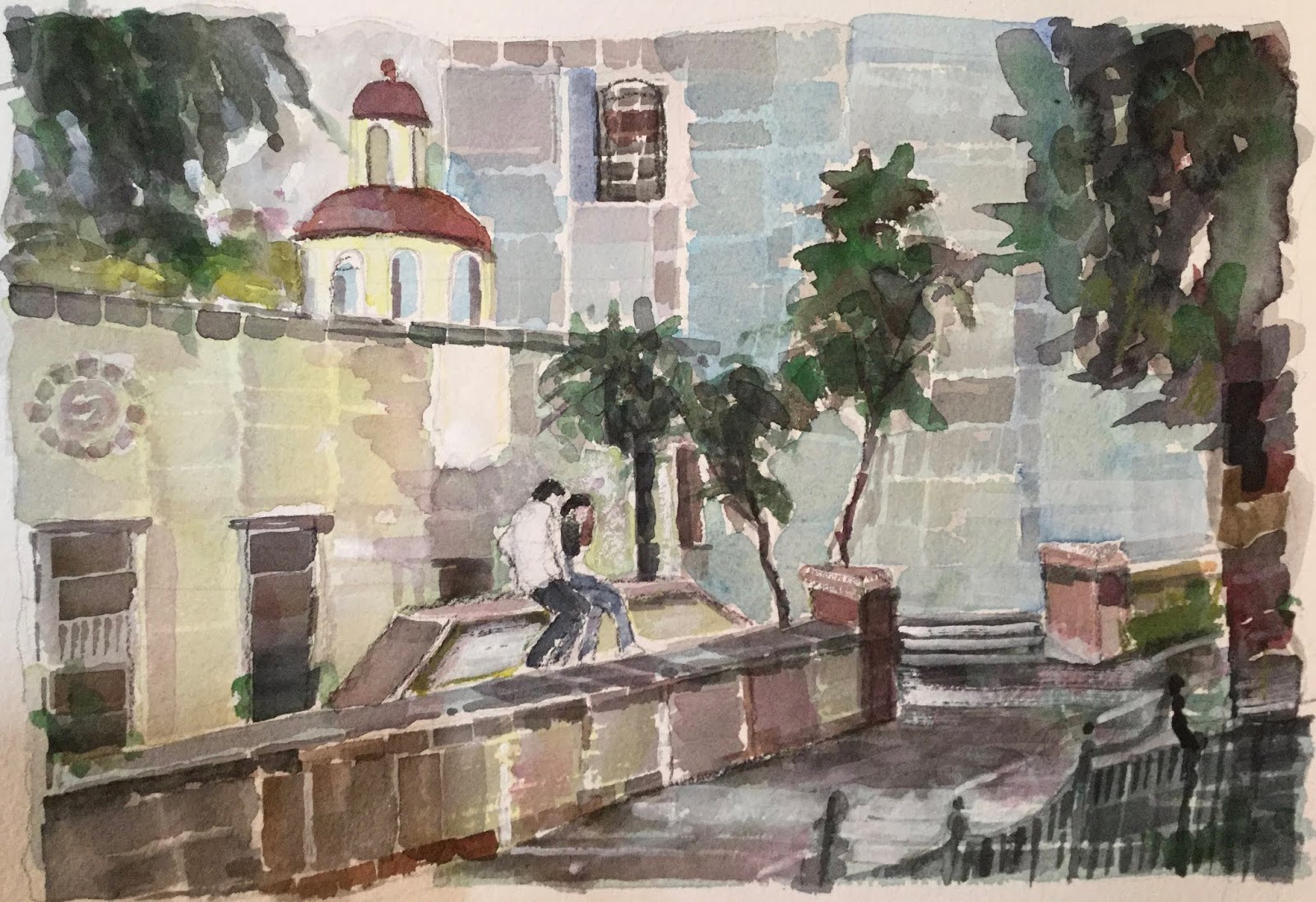
| Watercolor; "The Lovers", Plaza Principal |
Pozosoffers us a wide variety of painting opportunities that include:
* townscapes & historic architecture (especially mines)
* garden scenes
* vast, breathtaking landscapes
* themes & studies
The heart of Pozos is la Plaza Principal, a classic, formal, garden-like space edged by freshly painted, one-and-two story buildings constructed in a pueblo-early Baroque style. Civic buildings, a hotel, a bed and breakfast, casas and assorted shops occupy the buildings surrounding this captivating plaza. From here, narrow cobbled streets arranged in a grid pattern extend to the nearby foothills. The immediate encompassing area was heavily mined; much of the structural remains of the mines -such as buttressed walls, aqueducts, casas and abandoned chapels are still in place, providing us with a plethora of authentic, historic views. Local entrepreneurs offer tours of the mines.

Though a simple, quiet and relatively poor village, Pozos has a magical charm, a special quality for artists -and I believe it will prosper because of it special appeal and beauty. Ample lodging and restaurants provide you with a comfortable stay. Pozos is accessible by frequent bus service from Queretaro, Dolores Hidalgo, Guanajuato and San Luis Potosí. A few small hotels, posadas(inns) and a several Beds & Breakfasts provide comfortable lodging.

It was in the 21stcentury when Pozos emerged from its birth -and into a deep slumber- when nearly abandoned (in the 20thcentury) a time when demand for, and deposits of, minerals faded away. Pozos is a town built around mining, processing of minerals, companies supplying the industry and housing the miners. As such, Pozos was planned with military-like efficiency, with nearly straight streets (calles) forming a grid pattern that cover a mesa(flat hill) in the middle of a valley. The mesa’s two major ridges dip into the center providing an ideal location for the town’s center, an area of civic buildings, churches and shops. The streets are narrow and edged with adobe walls; las callesare paved with cobble stones, an ideal surface for horse and mule-drawn carriages and carts. Though once nearly abandoned, Pozos is arising from its past with a steady restoration of its historic center and nearby mines. Pozos is a small town with a population of approximately 7,000; it is an extraordinarily enchanting and romantic place but, being small, has limited socializing opportunities (which may not matter if you are with companions).

Many of the original casas are now in ruins, intriguing ghosts of its past -and now a “living outdoor museum” where you’ll encounter flocks of sheep, ducks and vaqueros(cowboys) on horse-back coming down the narrow lanes. Our areas of interest for landscapes are in the historic center, el centro historico, and the roads that lace the nearby mountains, connecting the various mines. Let’s now explore the area, beginning in el centro historical ...
A thorough description of the beauty of Pozos can be found in my book.