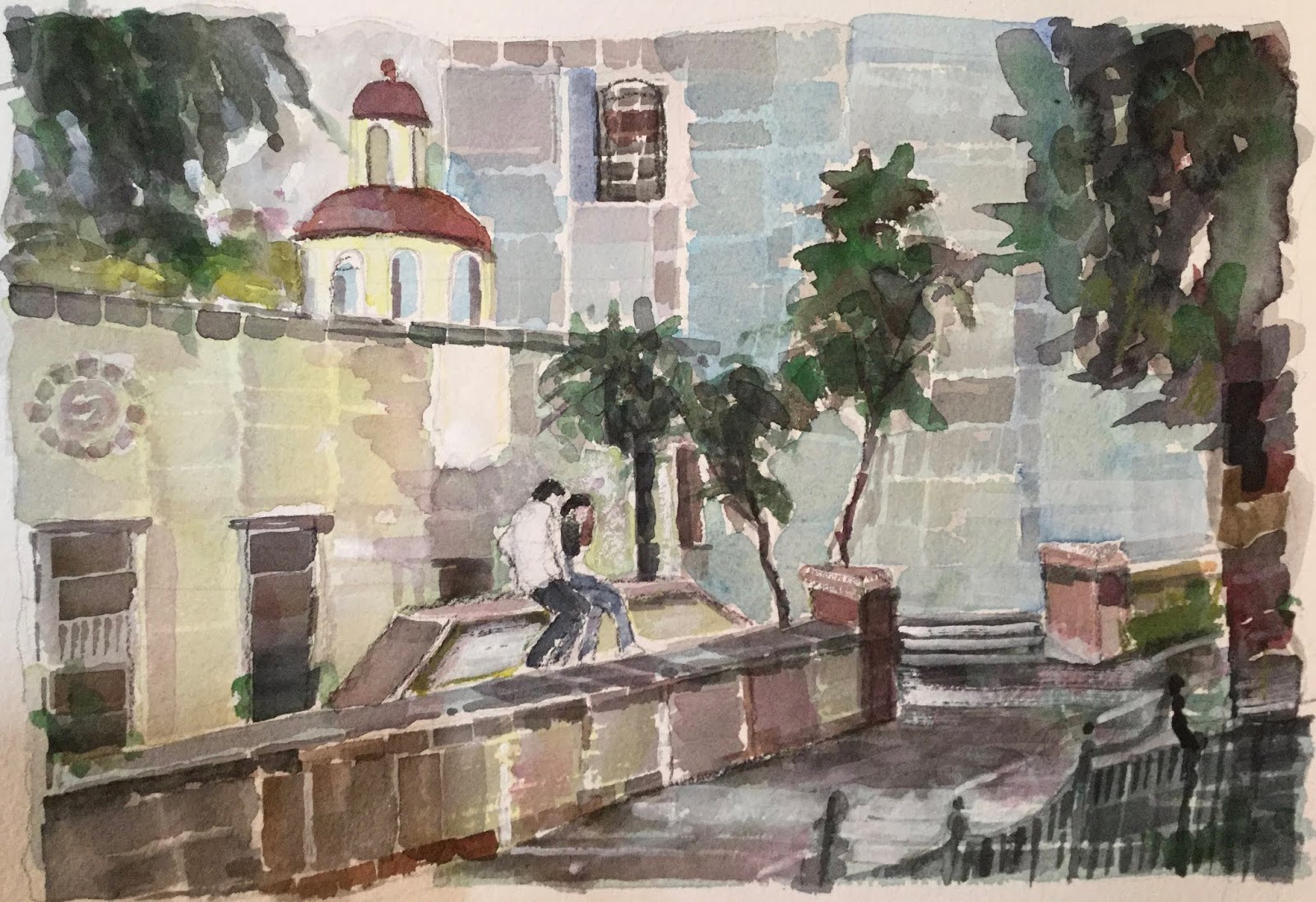
Saturday, May 18, 2019

Calvillo, Aguascalientes, Pueblo Mágico

Calvillo, Aguascalientes


If you head northward from central Mexico, roughly following the famed Camino Real (the “Silver Route”), you’ll pass near the enchanting town of Calvillo.  An official Pueblo Mágico, Cavillo occupies a broad valley just over a mountain range to the west of the Capital City of Aguascalientes.  Calvillo is more than a town-it’s a municipality that includes a broad region of mountains, forests, and lakes that include waterfalls and recreation areas. Small villages dot the countryside like jewels in a little garden. 
 
Illustrative Plan, Plaza Principal, Calvillo

Bandstand (kiosk), Plaza Principal, Calvillo 

Calvillo will appear in one of my future ‘”Painting Mexico” books. It is a magical town ideal not only for its beauty (landscape painting and photography), but also for hiking, camping and enjoyment of its culture…foods, handicrafts, parades and other events.  I highly recommend camping on the lake near the village of Malpaso, a 20-minute ride from central Calvillo. Here at this picturesque, mountain surrounded lake, you'll find cabins (casitas) for rent, as well as hotel rooms and a few lakeside restaurants. (I spent several days in one of the casitas, as shown in the lake view below).  One could easily spend an entire summer painting in this one location. 

The Lake, la Presa de Malpaso. 
The nearby village of Malpaso also offers many painting opportunities.  Tucked in a narrow agricultural valley, the town has dozens on paintable locations, including the plaza principal and the streets that extend from there.  Below is a map/plan that I made of this plaza.  The arrows show the locations for making great paintings. 

Illustrative Plan, Plaza Principal Malpaso, Cavillo
View of the Church, Community of Malpaso
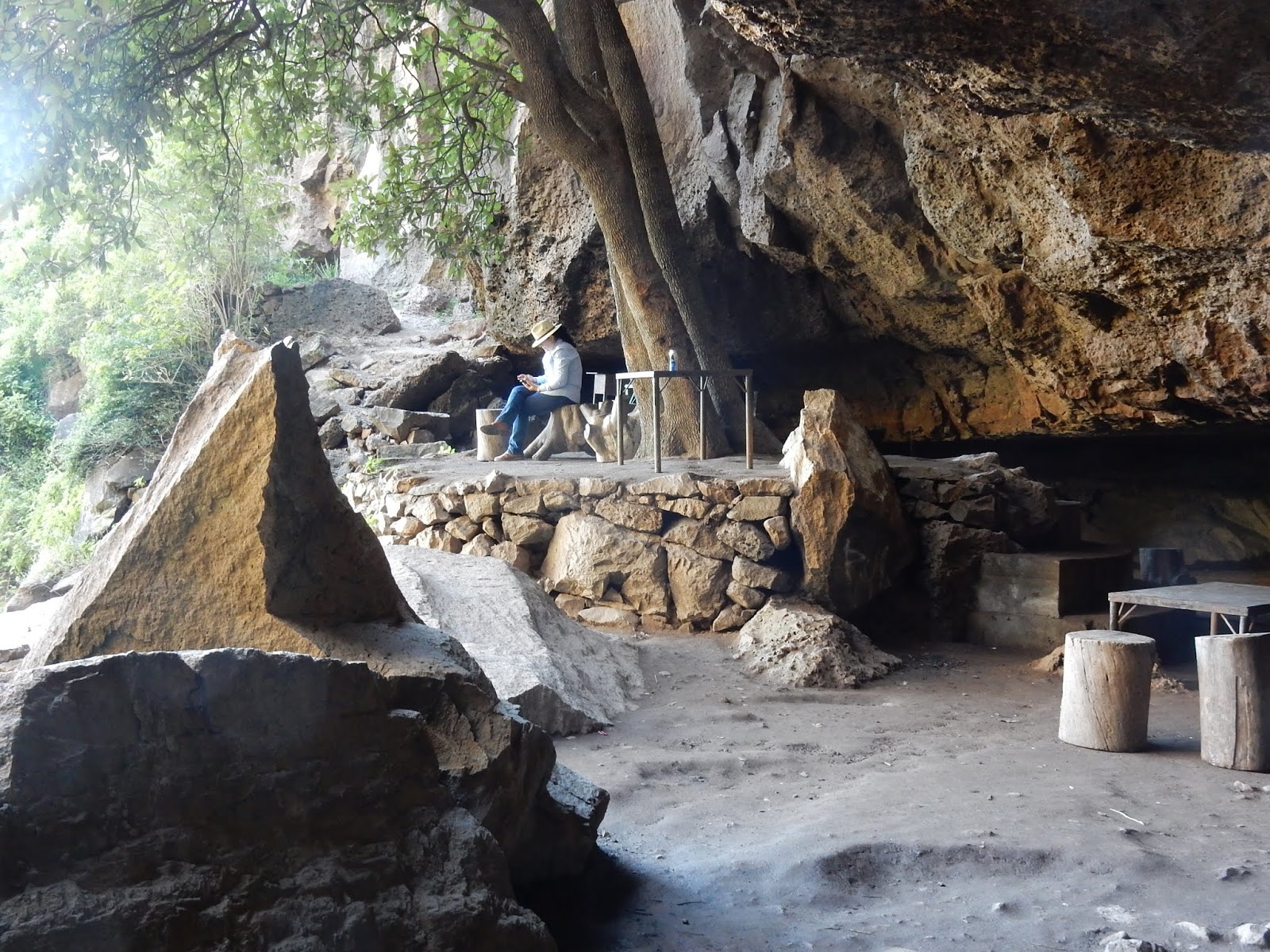
In the mountains about 20 miles west of Calvillo is a conservation area known as la Sierra del Laurel.  Here, you'll find a lake from which spills a spectacular waterfall, with a cave at its base (see photo below).  There are several rentable casitas at the edge of this lake, an alluring place to relax, hike and paint.  

The lake on la Sierra del Laurel. This scenic lake is a painters' paradise. 

View of a Cave at the Waterfall (la Cascada), located about 25 miles west of Calvillo  Centro.

Monday, May 13, 2019

Learning and Speaking Spanish

Learning and Speaking Spanish

As you likely understand, speaking some español is most helpful when visiting or traveling in Mexico, even if your vocabulary is only a few hundred words.  Speaking some español will allow you to eliminate much of the “friction”-frustration and misunderstandings that often accompany travel.  I emphasize the word “some”, as “some” is infinitely better than none.  Besides basic greetings (‘Buenos dias or Buenas tardes” (with a smile)-and basic vocabulary-you will enjoy your travels much more.   An important thing to learn is counting. 
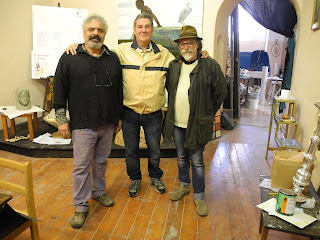
The author (center) with artist, Pino Siciliano (right) and his sculptor friend, Tivoli, Italy, circa 2103.

If just beginning to learn a language, keep in mind that vocabulary is more important than grammar.  The most important thing is to be able to communicate with simple nouns and verbs without worrying about complex grammar linking them together.  People will understand you; that’s the most important thing. Rather than judge your speaking ability, they will appreciate your effort to speak their language; in doing so you are showing them respect.

I speak from experience; Spanish is my fifth functioning language after French, Farsi, Italian and, of course, my native English. I had the required 2-years of French in college, and then taught Landscape Architecture (in French) at the University of Montréal in Québec.  Most importantly, I leaned how to learn a language (Farsi) in the Peace Corps in Iran, attending an in-country program that was intense and immersive, with native instructors. They corrected our accents and made us repeat words, phrases and sentence patterns until perfected.   I then worked for 2-years totally in Farsi-and some Kurdish. I learned that only by speaking, intense repetition and making lots of mistakes along the way, can one learn to speak another language.  This is how a child learns!  In learning how tolearn a language (like the respected Peace Corps method), was I able to refresh my French and then go on to learn Italian and now, Spanish.  

I work at it constantly by always initiating any interaction by speaking Spanish.  If I need to know a word, I look it up beforehand, as having a needhelps to remember a word.  

I also study Spanish constantly with flash cards and Spanish apps on my smart phone.  I make my own flashcards to develop the psycho-motor connection between hand and brain, sounding the words as I write them to strengthen the neural pathways of memory.  I often review the flashcards while walking or enjoying savory juevos rancherosin a café.  I perfect, as best I can, my language skills by using them. 

Spanish Learning Programs   Here are several language programs that I’ve used over the years, the best of dozens of programs and leaning techniques that I have explored.  

Rosetta Stone.  (Spanish Levels 1-5)  Though a relatively expensive program, Rosetta Stone is worth every penny.  The program uses only images to teach you the words (no English or other language are used). Rosetta Stone has five levels, and cycles through graduated learning exercises based on images, constantly changing the format-from recognition, listening to the pronunciation, repeating, reading and writing.  It uses all the senses (seeing, hearing, and writing-typing (psycho-motor learning connections by using the hand, arm and sight). You are constantly drilled with exercises and quizzes. Though relatively expenses, you can repeat lessons as often as you wish.  

“Great Courses” tm: Learning Spanish(2-levels): How to Understand and Speak a New Language by Professor Bill Worden. These courses are on videos, with guidebooks. Each course consists of 30 half-hour lessons presented by a very talented and effective teacher. The courses are excellent for grammar, reading and vocabulary building; they are viewed on-line and come with apps for smartphone use.  www.theGreatCourses.com.  

Yabla Spanish.   This is a fabulous course that consists of about 1600 short videos that cover a huge variety of topics-from the arts through science, travel and tourism, health, culture, grammar, music, drama, etc.  The videos are produced in most Spanish-speaking countries, so you’ll be exposed to a variety of accents in diverse regions. This course is loaded with exercises, quizzes and flashcards to help you to learn quickly and with much fun.    www.Yabla.com 

Transparent Language   In addition, I subscribe to Spanish Word of the Day, a free e-mail service by Transparent Language.com.  This service presents a word, a sentence showing how it’s used, and a button to hear the word spoken. 

The above courses, programs and methods are among the dozens that I have tried over the years.  Naturally, we each have individual preferences for learning, so I urge you to explore and vary the methods to keep learning Spanish fresh, interesting and relevant to your needs at the time.  Adios!

5-13-2019 


Thursday, April 25, 2019

The Camino Real (The "Silver Route")

Mexico’s Camino Real, the “Silver Route” 

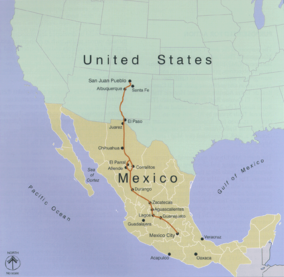
Mexico’s has an historic route called the Camino Real or, more formally, the  “Camino Real de Tierra Adrentro” (“Royal Road of Interior Land”), a commercial route that extended from the Valley of Mexico to Sante Fe, New Mexico (16th – 19thcenturies).  The route, then a trail traveled by foot, horses and wagons, included many outposts –forts, haciendas and chapels- to protect the Spanish travelers from attacks by indigenous peoples, especially the Chichimecas.  The route was also called La Ruta de la Plata (“The Silver Route”), because it followed a chain of volcanically formed mountains where minerals such as silver, gold, copper, turquoise and salt were mined.  The 2,560-kilometer (1600-mile) route, now an UNESCO World Heritage Site (Patrimonial Mundial), has 59 historic points along the way.  

CaminoRealAdentro.png

This route was well established by indigenous kingdom and tribes long before the Spanish arrived in the 16thcentury.  Elcamino, used for hunting and trade, connected important locations in Meso-America and the Rocky Mountains by the year 1000. The route follows the long, rugged Sierra Padre Mountain chain, emblematic of the breathtaking “Western” landscape.  

El Centro Historico, San Miguel de Allende
Many of the pueblos in this blog or in my book projects are either directly on el Camino  (Guanajuato City, San Miguel de Allende, Sombrerete) - or were functioning offshoots, such as Dolores Hidalgo, Mineral de Pozos, Calvillo, Real de Asientos, Pinos and Nochistlán.  The adjacent off-shoot towns provided essential services for mining and traveling on the Camino Real, such as security out-posts, banking, supplies and food sources like ranching and farming (San Miguel de Allende, Dolores Hidalgo).

Sombrerete, a Pueblo Mágico on El Camino Real
 
Many of these pueblos have historic Camino Real sites and structures such as churches, bridges, cemeteries, mines, aqueducts, etc.. El Camino now consists mostly of highways and roads that connect or link the recognized sites and structures.  Many of these sites are fascinating and scenic subject matter for painting or photography.  I urge you to visit them. 

The Historic Church/Convento, Atotonilco (San Miguel de Allende)

 My current residence in San Miguel de Allende is on the official route; and several painting locations in my book are Patrimonial Mundial sites. I intend to emphasize, whenever feasible, these captivating sites in future writings. 

Pinos, Pueblo Mágico-an Old God & Silver
Town. 
The follow link summarizes the Camino Real clearly and succinctly: 
https://en.wikipedia.org/wiki/Camino_Real_de_Tierra_Adentro

Monday, April 15, 2019

The Sierra Gorda Mountains: A Scenic Route

The Sierra Gorda Mountains of Mexico 

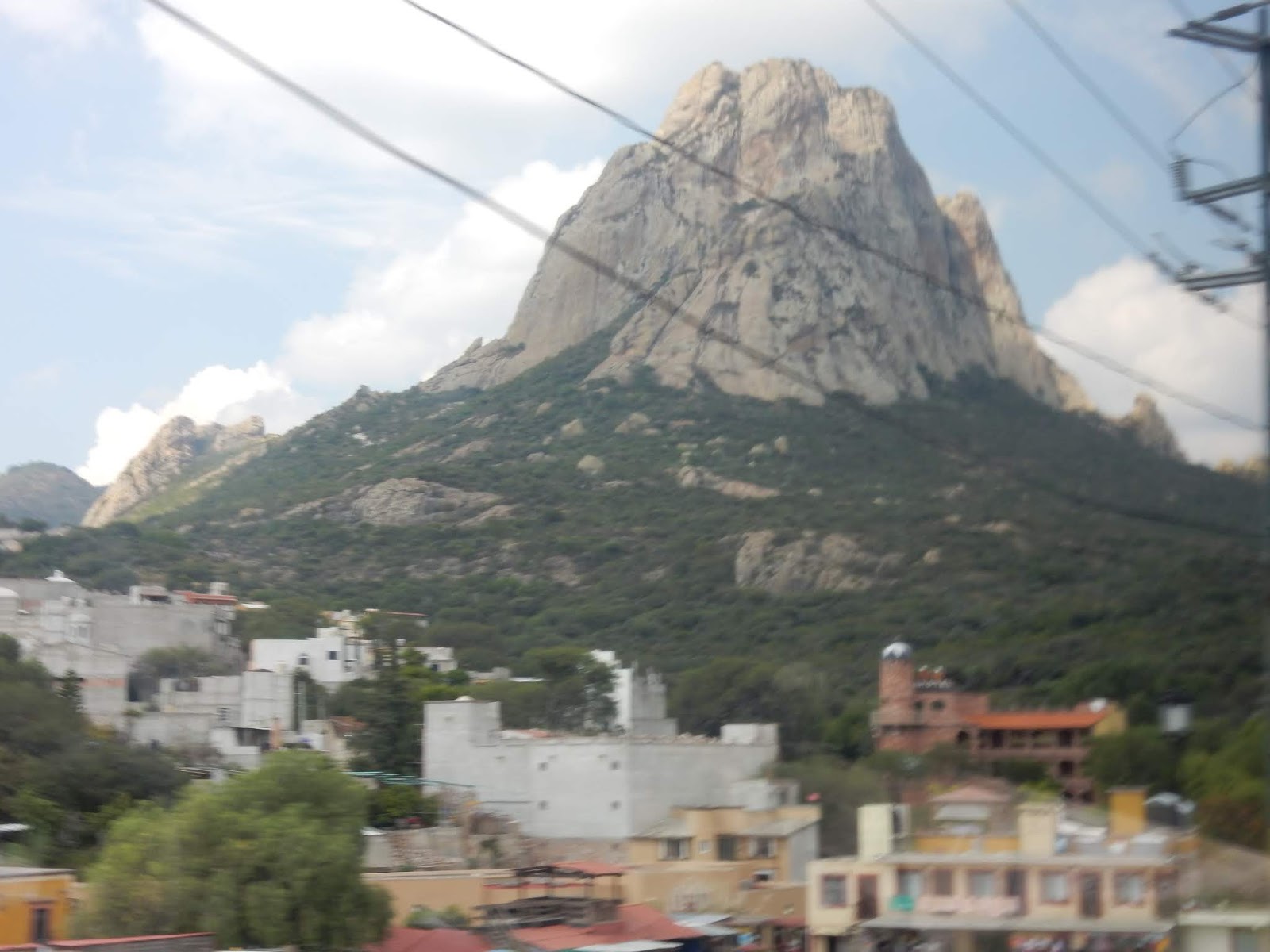
The pinnacle of Bernal. This is the second highest monolith in North America.
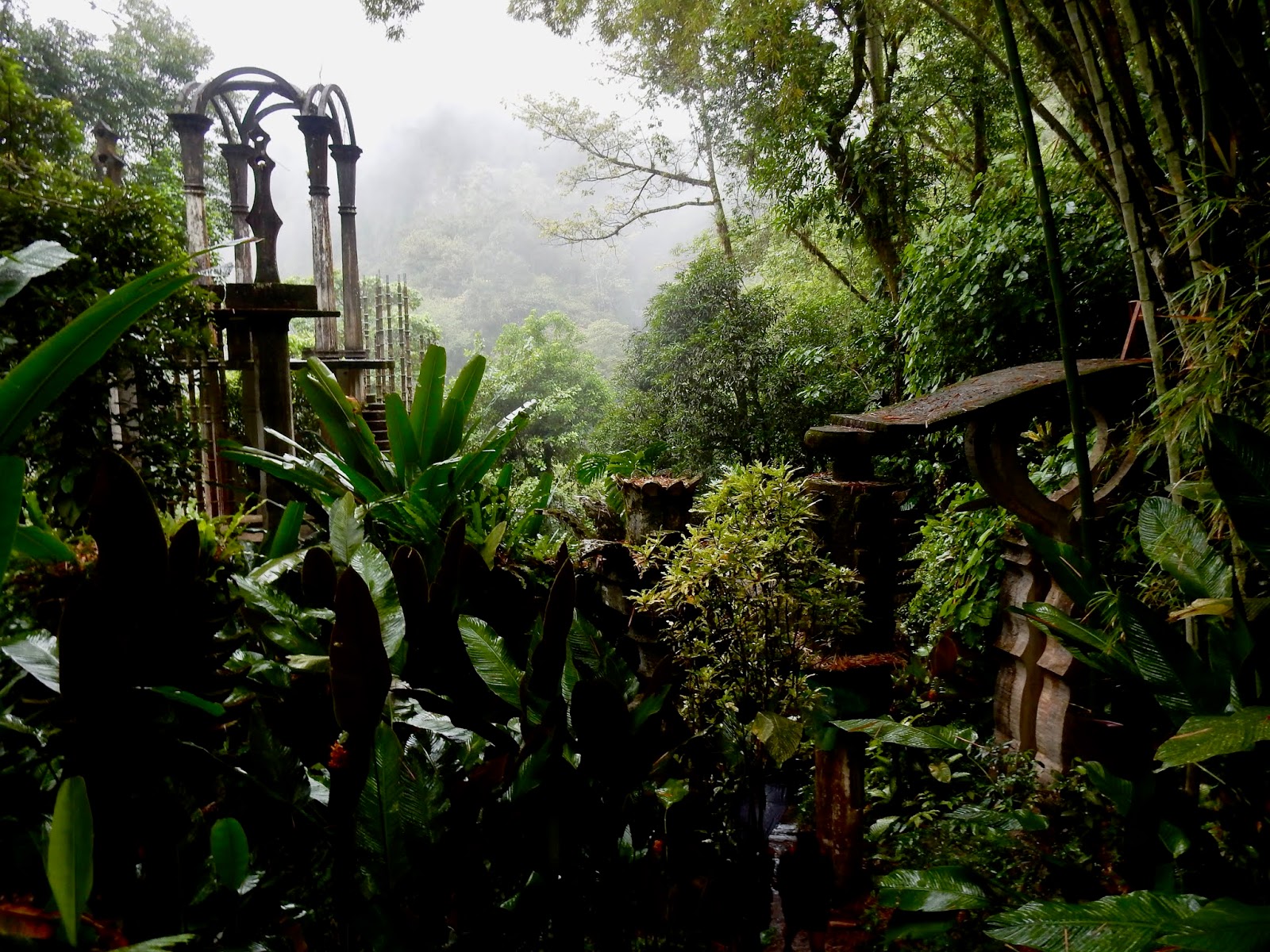
 I recently returned from a research trip to many towns in the Sierra Gorda Mountains in the State of Querétaro in central Mexico in a region a few hours north of Mexico City.  The trip was rewarding because I “discovered” a number of pueblos and communities that deserve coverage in another book. The places are (from west to east): Bernal de Peña, Piñal de Amoles; and Jalpan de Serra, a town with a group of five Spanish Franciscan Missionary churches (misiones) that are, collectively, a United Nations World Heritage Site(s). From Jalpan, I took a quick trip to Xilitla where Sir Edward James’s incredible garden is the main attraction. Bernal, Jalpan and Xilitla are official Pueblos Mágicos. Together, these places provide a plethora of scenic beauty and historic charm for visual artists and architects, a region where one could spend a lifetime documenting the beauty. I will write about each individual town in more detail in future postings. 

A view of Pinal de Amoles
The Sierra Gorda Mountains are a sub-region of the famous Sierra Madres Oriental, a mountain chain that runs north-south through eastern Mexico. They were formed by a combination of tectonic plate buckling, along with volcanic forces.  As such, the mountains are rugged, varied and panoramic. The area I explored was on the eastern slope of the Gorda where increased rainfall produces lush, sub-tropical topography. All of the above towns and places are located in these breathtakingly picturesque mountains. 

La Parroquia, the church that is the focal point of Pinal.

My research trip took several weeks.  I traveled by public transportation the whole way.  This includes a luxury bus (Primera Plus bus line) from the City of Querétaro to Jalpan; then regional bases and vans (that stop frequently), and a small car driven by my licensed tour guide to visit the mission churches scattered among Jalpan’s surrounding mountains.  Travel time from my origin, San Miguel de Allende, to Jalpan de Serra takes around 6.5 hours (that includes changing buses in the City of Querétaro). 

The Mission Church, Jalpan de Serra.
The road to Jalpan and Xitlia twists through the dense mountains, including heart-pounding hairpin curves edged with cliffs that plummet into canyons below.  (Because of the scenic, pulse-racing drama, this route is popular for motorcycle touring). By mistake, I got of the bus in Pinal de Amoles-early and unplanned-due to confusion on my part.  This was a delightful surprise because, standing at the bus station off the narrow road, I saw spectacular views and decided to stay for a couple of nights on my way back. This rewards my philosophy of finding such places that are “off-the-beaten-path”.

This author map-making at a Mission church.

This posting is just a teaser to explore this scenic route.  I plan to write about each town and place in more detail in future postings.  Adios!       4-15-2019

A view in Sir Jame's garden, Xilitla.


Monday, April 1, 2019

Dolores Hidalgo, Pueblo Mágico

Dolores Hidalgo, Pueblo Mágico

The road from Guanajuato to Dolores Hidalgo climbed steadily, looping around old, sun-bleached buildings, craggy outcrops and groves of weather beaten oaks. The bus that stopped frequently to pick someone up, or drop someone off. Country music blared from the speakers (when the reception was good), but often faded into silence.  Vistas opened and closed like the parting of curtains as we wound through the mountain passes …”  [journal entry Jan 15, 2016]
 
La Parroquia Church. Jardín Principal
If you ever wondered what an authentic modern-day ranching town is like (or not like), Dolores Hidalgo may fit the bill.  A town located in a broad, flat valley in central Guanajuato State, Dolores Hidalgo is considered the “heart of Mexico”, as this is where the insurrection against Spanish colonial rule began (1810-11) –an insurrection which led to the revolution and the founding of the country when the courageous priest, Miguel Hidalgo, led a miners’ revolt against the Spanish colonial rulers. Essentially, Dolores Hidalgo is the equivalent of the towns of Concord or Lexington -where the American Revolution began.

A Streetscape, watercolor.

Although a popular destination for Mexicans interested in their National history, Dolores Hidalgo does not have a “touristy”, international character. Rather, it’s an authentic Mexican town located in a region known for agriculture, ranching, forestry and mineral extraction.  Dolores Hidalgo has a strong commercial pulse, a place that supports a vibrant market area (mercado), and shops (tiendas, botegas) of every stripe.  The town also has a small university that supports a youthful culture with institutions (museums, craft shops, etc.), businesses, services and cultural events. Located in ranching country, Dolores has an authentic “cowboy” culture, noticeable as you pass about town, with many of the men wearing sombreros and cowboy boots. Pickup trucks outnumber autos. For those interested, there’s also a rodeo held on Saturdays. The above map/illustrative plan shows some stunning places to paint in Dolores Jardín Principal.  The map is entirely made by hand and is colored by watercolors.  

Courtyard at Temple Llanido

I selected Dolores Hidalgo because of its significant contrasts to Guanajuato, San Miguel de Allende. Dolores Hidalgo is more “laid-back” and less intensive, a town where the pace of life is slower, more rooted to the earth.  This is a place for artists who enjoy painting gardens, enchanting courtyards, architectural details -and figure studies from café tables and park benches. 
 
Illustrative Plan, Jardín Principal, watercolor & graphite on Arches paper

Dolores Hidalgo is laid out with a grid plan, the streets forming small, nearly square blocks.  The streets are narrow and edged with pueblo-style, one-story casas; the traffic is mostly one-way.  To compensate space-wise for the narrow streets, most casas have interior courtyards to allow the sun and breezes to enter.  As such, you’ll find many delightful restaurants, cafes and shops included in, or clustered around, interior courtyards.  Many are like cloistered gardens, with orange trees, wisteria, potted plants and often a fountain gurgling in the center. 

The Bridge Over El Rio, oil on canvas

Let’s now explore Dolores for its prime painting locations, beginning with its central park, el Jardin Principal. (My book covers about a half-dozen picturesque locations in Dolores Hidalgo.  These places are lavishly presented with maps, drawings and paintings).

Plaza Compositores - Where Musicians Play day-long.

Map/Illustrative Plan of Plaza Compositores
To purchase a “Painting Mexico” book from publisher (less expensive): 

http://www.blurb.com/b/8596527-painting-mexico-magical-pueblos-in-guanajuato

(This site is set to allow you to view all the pages in the book).

To purchase “Painting Mexico” book from Amazon: http://a.co/65YVml8   

Please help me fund my art-travel books by purchasing prints on FineArtAmerica.com.  (All expenses for the production and publishing of these books are self-funded by me.  I consider much of my effort to promote scenic tourism to towns in Mexico to be charity).

To purchase prints of some of the paintings, drawings & maps in this book: www.fineartamerica.com“Jack Hannula” 

Please help!  Purchasing a print of this map will help me to (self) fund the costly production and publishing expenses of my “Painting Mexico” books. In other words, please help me help Mexico’s “magical towns”.  Many are poor.   

I am frequently asked, “How do I buy your art, Jack?”  Because of these many requests, I am making quality prints of my maps and some of my art available for purchase on the Internet.  To purchase prints, follow this link: www.fineartamerica.com“Jack Hannula”.  

Saturday, March 30, 2019

Mineral de Pozos, Pueblo Mágico

Mineral de Pozos
(San Pedro de los Pozos)****

Detail of my "Route of Vistas"

An hour drive northeast of San Miguel sets a small Colonial mining town known simply as “Pozos”.  Nestled in rugged mountains Pozos –and its once intensively mined area (silver, gold and rare metals)- offers us an exceptional painting opportunity in an authentic, off-the-beaten path setting. Pozos is a sleepy, laid-back place most suitable for undisturbed writing and art in a rural Mexico setting. This is a village of colorful casas; narrow, cobbled lanes and chapel domes punctuating the azure sky.  Mineral de Pozos, an officially designated Pueblo Mágico founded in 1576, is one of my most scenic towns, with hundreds of “postcard” scenes to add to your body of work.

Watercolor; "The Lovers", Plaza Principal

Pozosoffers us a wide variety of painting opportunities that include:

* townscapes & historic architecture (especially mines)
* garden scenes
* vast, breathtaking landscapes
* themes & studies


The heart of Pozos is la Plaza Principal, a classic, formal, garden-like space edged by freshly painted, one-and-two story buildings constructed in a pueblo-early Baroque style. Civic buildings, a hotel, a bed and breakfast, casas and assorted shops occupy the buildings surrounding this captivating plaza. From here, narrow cobbled streets arranged in a grid pattern extend to the nearby foothills. The immediate encompassing area was heavily mined; much of the structural remains of the mines -such as buttressed walls, aqueducts, casas and abandoned chapels are still in place, providing us with a plethora of authentic, historic views. Local entrepreneurs offer tours of the mines. 


Though a simple, quiet and relatively poor village, Pozos has a magical charm, a special quality for artists -and I believe it will prosper because of it special appeal and beauty. Ample lodging and restaurants provide you with a comfortable stay. Pozos is accessible by frequent bus service from Queretaro, Dolores Hidalgo, Guanajuato and San Luis Potosí. A few small hotels, posadas(inns) and a several Beds & Breakfasts provide comfortable lodging.


It was in the 21stcentury when Pozos emerged from its birth -and into a deep slumber- when nearly abandoned (in the 20thcentury) a time when demand for, and deposits of, minerals faded away.  Pozos is a town built around mining, processing of minerals, companies supplying the industry and housing the miners.  As such, Pozos was planned with military-like efficiency, with nearly straight streets (calles) forming a grid pattern that cover a mesa(flat hill) in the middle of a valley.  The mesa’s two major ridges dip into the center providing an ideal location for the town’s center, an area of civic buildings, churches and shops.  The streets are narrow and edged with adobe walls; las callesare paved with cobble stones, an ideal surface for horse and mule-drawn carriages and carts. Though once nearly abandoned, Pozos is arising from its past with a steady restoration of its historic center and nearby mines.  Pozos is a small town with a population of approximately 7,000; it is an extraordinarily enchanting and romantic place but, being small, has limited socializing opportunities (which may not matter if you are with companions). 
    

Many of the original casas are now in ruins, intriguing ghosts of its past -and now a “living outdoor museum” where you’ll encounter flocks of sheep, ducks and vaqueros(cowboys) on horse-back coming down the narrow lanes. Our areas of interest for landscapes are in the historic center, el centro historico, and the roads that lace the nearby mountains, connecting the various mines. Let’s now explore the area, beginning in el centro historical ...


A thorough description of the beauty of Pozos can be found in my book.  

Thursday, March 28, 2019

Pueblos Mágicos as Retirement Communities

As I briefly mentioned in previous postings, many of Mexico's  Pueblos Mágicos would make ideal retirement towns for those looking for places that are scenic, historically interesting, and have basic institutions and services that are important to retirees.  These include security (low crime), basic medical services found in sophisticated clinics or small hospitals (and relative closeness to full hospitals and hour or two drive away; museums, tourism services, and adequate lodging.  (The above basic criteria is required to become an official Pueblo Mágico.)  While some of the pueblos are small and isolated, at least a third of those I have visited have large enough populations to provide a broad range of goods, services and culture to live well and inexpensively. These enchanting towns are largely overlooked by the large publishing sites that follow the crowded beaten paths.

The Church, la Parroquia, San Miguel de Allende
In fact, the 111 official Pueblo Mágicos (in all of Mexico's 31 states) offer a huge variety of choices that would be of interest to most anyone-from cool, mountain towns, to warm coastal locations.  Some, such a San Miguel de Allende (a former Mágico and now an UNESCO World Heritage Site), are as sophisticated as large cities-while many other "Magicals" are small with only a few thousand population of mostly artisans and ranchers, offering a peaceful, simple place to live.  Most all are within an hour-or-two drive from State Capitols or vibrant cities, where one could find almost any service or material good needed. Within the system of Pueblo Mágicos, there is a place for almost anyone. I could easily write a book on retirement potential of these towns, rather than their scenic beauty for landscape artists, photographers and architects... but what I dowrite about corresponds to "magical" qualities that would attract many retirees that still have creativity, adventure and spirit flowing in their blood-and limited retirement funds. After all, the purchasing power of the US dollar or Euro is hugely significant in relation to Mexico's peso.

Jardín Principal, Jalpan de Serra in the Sierra Gorda Mountains.  This is a lovely, quiet town.

While I plan to elaborate more about the retirement potential of these pueblos in the future, there are a few interesting first steps you can take to consider these places: (1) begin learning Spanish well enough to shop, converse with your neighbors and assimilate into these towns. (2) The second major step is to research these towns (see www.mexicodesconocido.com), -and to visit the towns that are of interest.  One last suggestion: never purchase property without first renting to make sure that you and your "pueblo-of-interest"-match well!  Once you find your ideal "magical pueblo" you can apply for a visa permanente(permanent visa) and qualify for Mexico's excellent national health care system. To date, I have visited about a third of the 111 Mágicos in central and northern Mexico and have chosen about 20 for current and future books for my series on "Painting Mexico".  For my purposes (art and travel), I explore these towns in great detail and learn much about them from local officials. 

Pozos de Mineral, Guanajuato.  This is a small, enchanting gold town near San Miguel de Allende.
Here are some mid-sized Mágicos that are desirable for retirement:

San Miguel de Allende (sophistic and beautiful but getting very expensive)
Calvillo, Aguascalientes
Sombrerete, Zacatecas
City of Guanajuato (a UNESCO site)
Dolores Hidalgo, Guanajuato (small but close to San Miguel)
Parras de la Fuente, Coahuila (an oasis in the desert, but cultured)
Tequisquiapan, Queretaro
Jalpan de Serra, Querétaro
Pátzcuaro, Michoacán

Pátzcuaro, Michoacán.

I will be adding to the above list and providing more information on each town in future postings. Stay tuned.  

San Miguel´s “Globo” Skyscape J. K. Hannula San Miguel is routinely acclaimed as the world’s most beautiful -or “most livable” town/small...